
-
Panely purpenyJaka by bola cena 100 mm panel dakujem
-
Opłacalność fotowoltaikiRosnącym problemem związanym z rozwojem fotowoltaiki jest...
-
poptávka a cenuDobrý den,prosím o podrobnosti tohoto produktu.Ahoj Zdarsa
-
Ocelové profilyDobrý den prosím Vás o radu , jaké profily použít na...
What does the cross-section of a multilayer panel look like?
PIR/PUR multilayer panels are advanced insulating materials used in construction for insulating roofs, walls, and floors. Their structure ensures effective protection against heat loss while providing resistance to moisture and mechanical damage. These panels consist of multiple layers, including a core made of polyisocyanurate (PIR) or polyurethane (PUR) foam, surrounded by external protective coatings. This article will discuss the structure of a PIR/PUR multilayer panel's cross-section, highlighting the properties of each layer and its importance for the entire construction. Multilayer panels are available in the offer of e-PROJECT21. Let's take a closer look.
The PIR/PUR foam core and its insulating properties
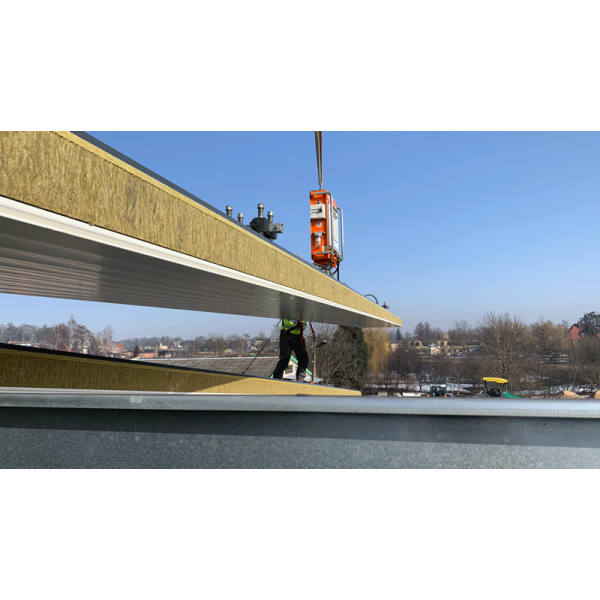
The central element of a multilayer panel is the PIR or PUR foam core, which is responsible for the material's main insulating properties. Polyisocyanurate (PIR) foam is characterized by higher temperature resistance and a better thermal conductivity coefficient compared to polyurethane (PUR) foam, making it a popular choice in areas requiring greater durability. PIR and PUR form a rigid, low-density structure that effectively retains heat, minimizing energy losses. Thanks to its closed-cell structure, the panel's core is resistant to water absorption, preventing moisture penetration and maintaining its insulating properties for many years. The foam's properties allow for a reduction in panel thickness without compromising insulation quality, making it an ideal solution for projects where space conservation is crucial, such as when insulating internal walls.
External layers and their role in protecting the core
PIR/PUR multilayer panels are covered with protective layers that shield the core from mechanical damage and external factors. The most commonly used coatings are steel or aluminum sheets coated with anti-corrosion layers. This layer not only protects the core from moisture and UV radiation but also enhances resistance to impacts and pressure, which is essential when the panels are used on roofs or external walls. The panels can also be covered with a plastic foil that increases the material's flexibility, which is useful in installations requiring precise fitting. The external layers provide additional aesthetic value, available in various colors and textures, allowing their appearance to be tailored to a building's design concepts.